Resource Center

Tokenized Repo:

Putting Collateral in Motion

The repo market has long enabled market participants to turn securities into liquidity. Tokenization can change how quickly and continuously that exchange happens, enabling collateral and cash to settle together, move intraday and ultimately operate beyond traditional market windows. This guide breaks down how tokenized repo works, who’s involved and what a more connected collateral market can unlock.

Market Impact

What Changes When Repo Becomes Tokenized?

The underlying economics remain familiar. One party puts up securities as collateral to access cash. Another provides that cash in exchange for the collateral. What changes is the surrounding infrastructure and with it, when assets can settle, move and be put back to work.

Settlement
Upon Transaction

01 .

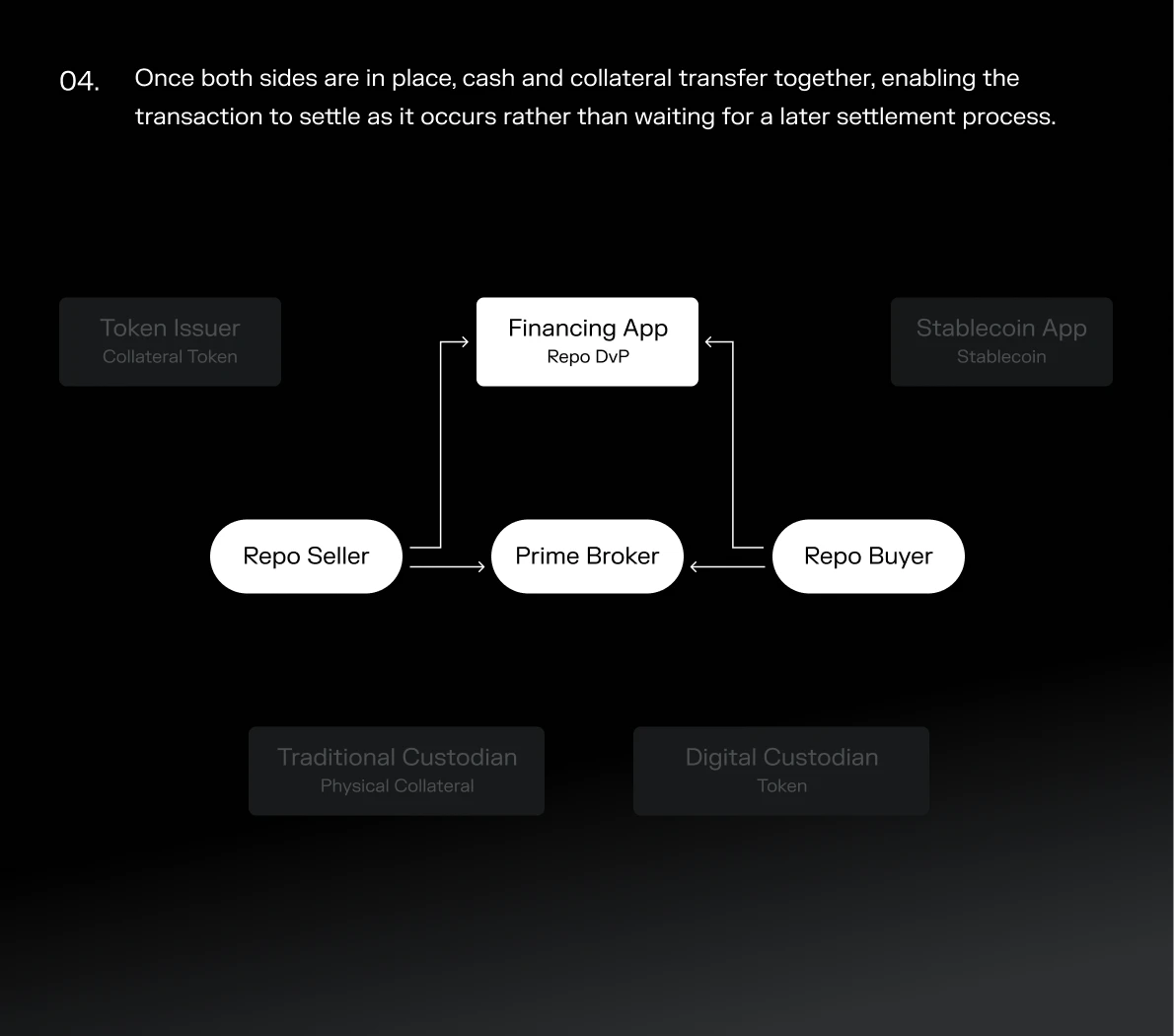
DVP enables collateral and cash to transfer together, reducing the need to wait for a later settlement cycle.

Less
Idle Capital

03.

Faster settlement can put cash and collateral back to work sooner instead of leaving assets tied up between transaction and settlement.

More
Continuous Liquidity

02.

On-chain workflows can support repeated intraday transactions, with the potential to extend activity across weekends and toward 24/7 markets.

Market-Wide
Collateral Mobility

04.

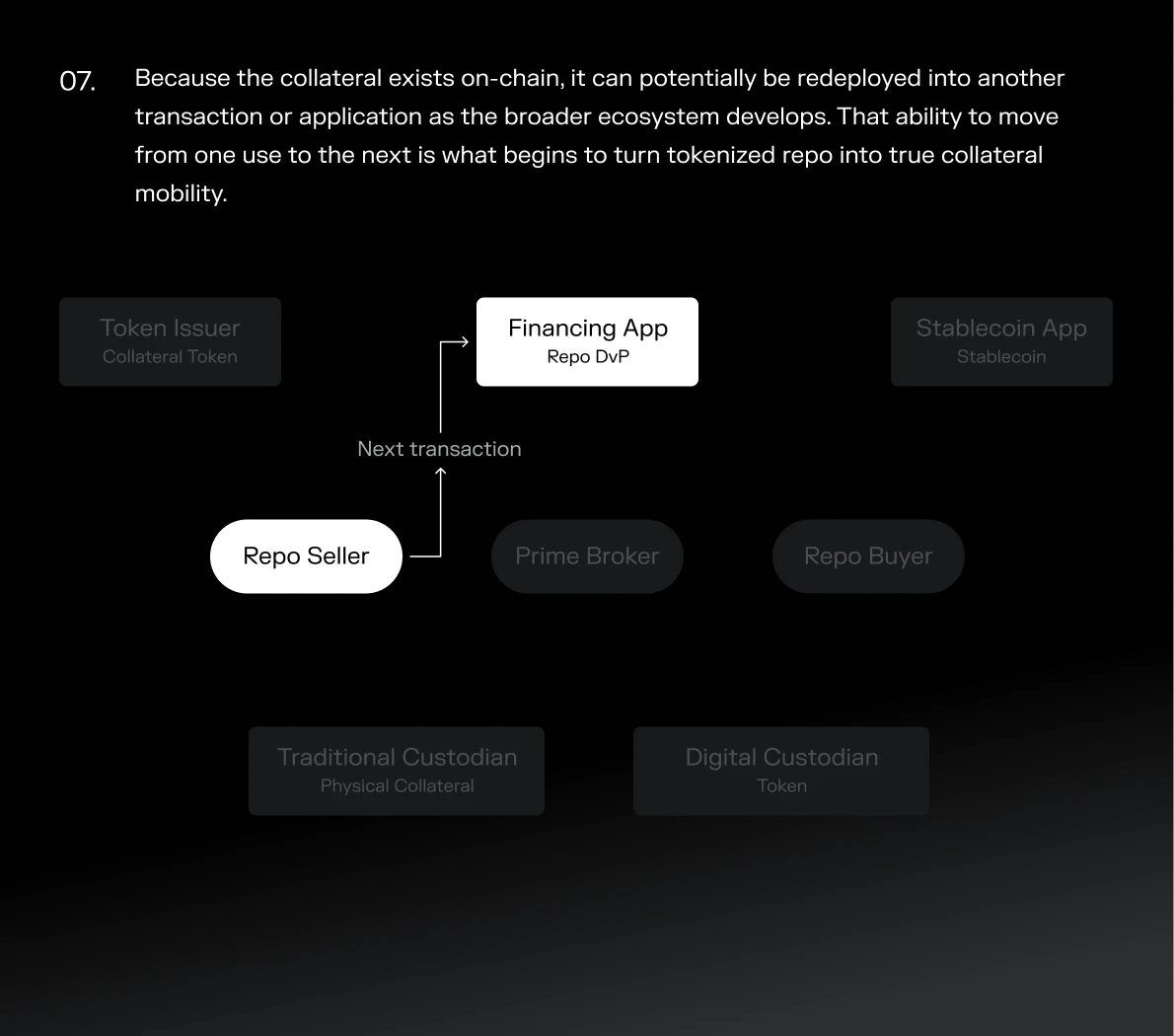
Interoperable on-chain collateral can move between participants and applications, helping create a more connected collateral market.
How It Works

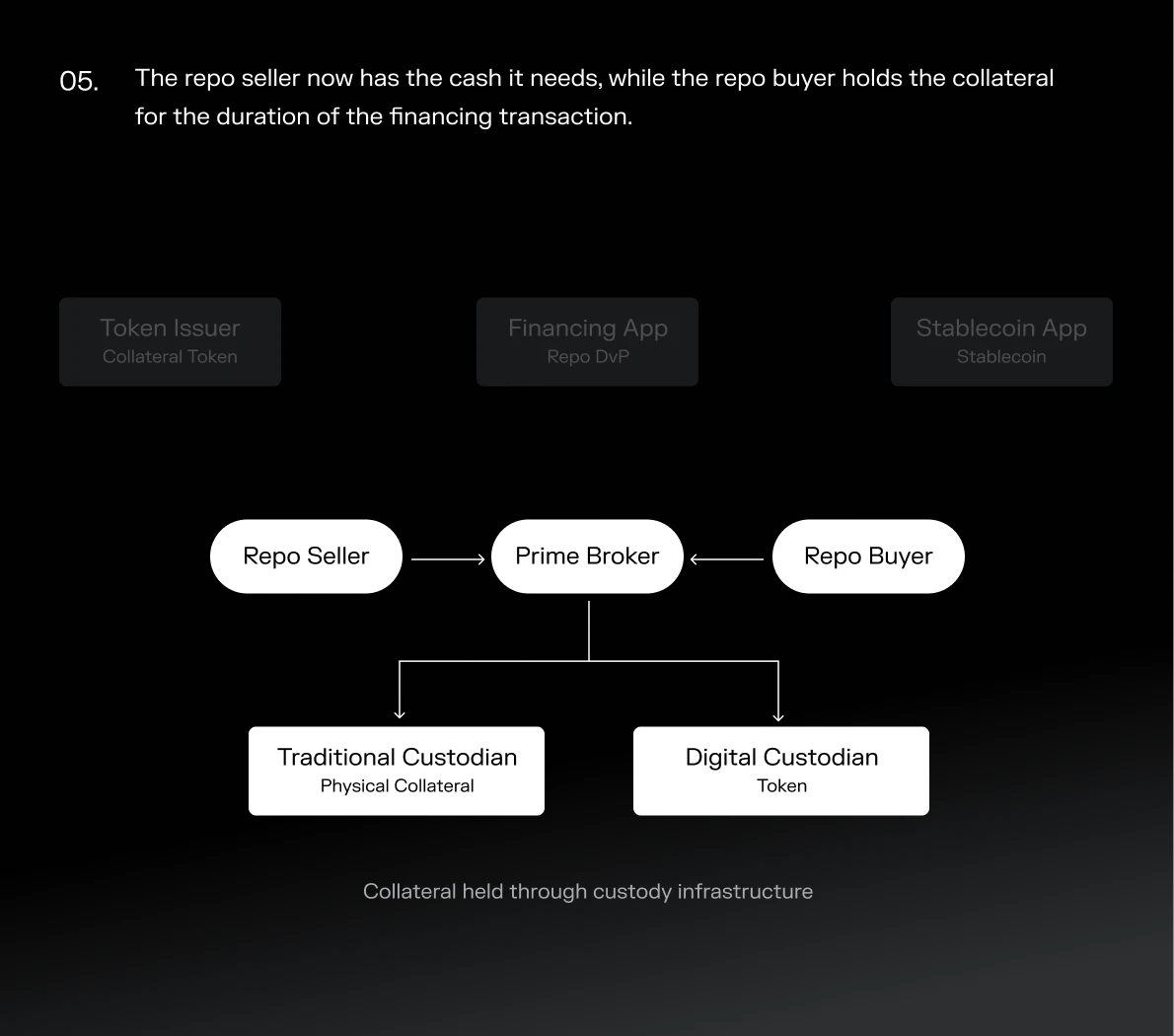
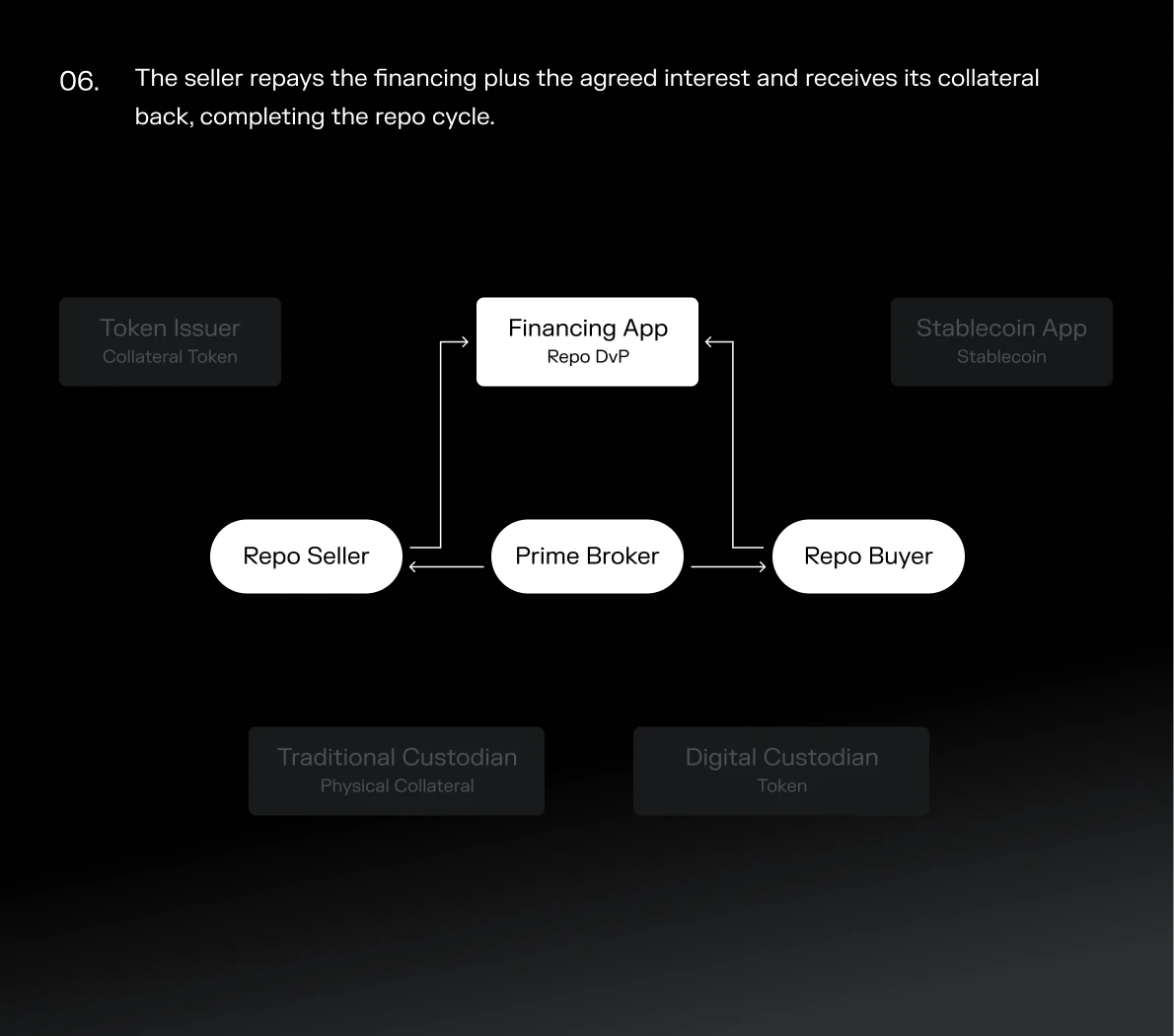
Follow a Tokenized Repo Transaction

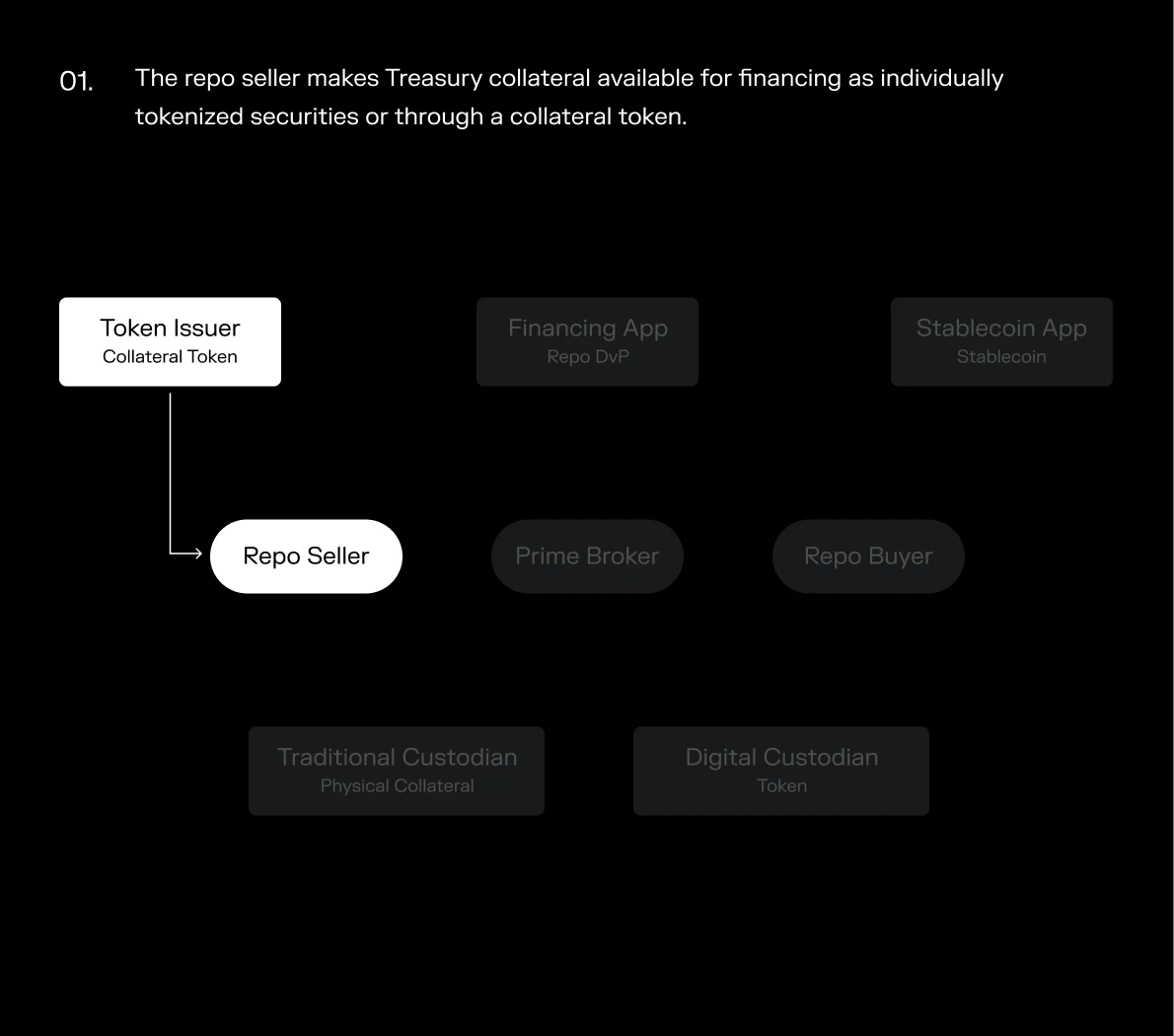
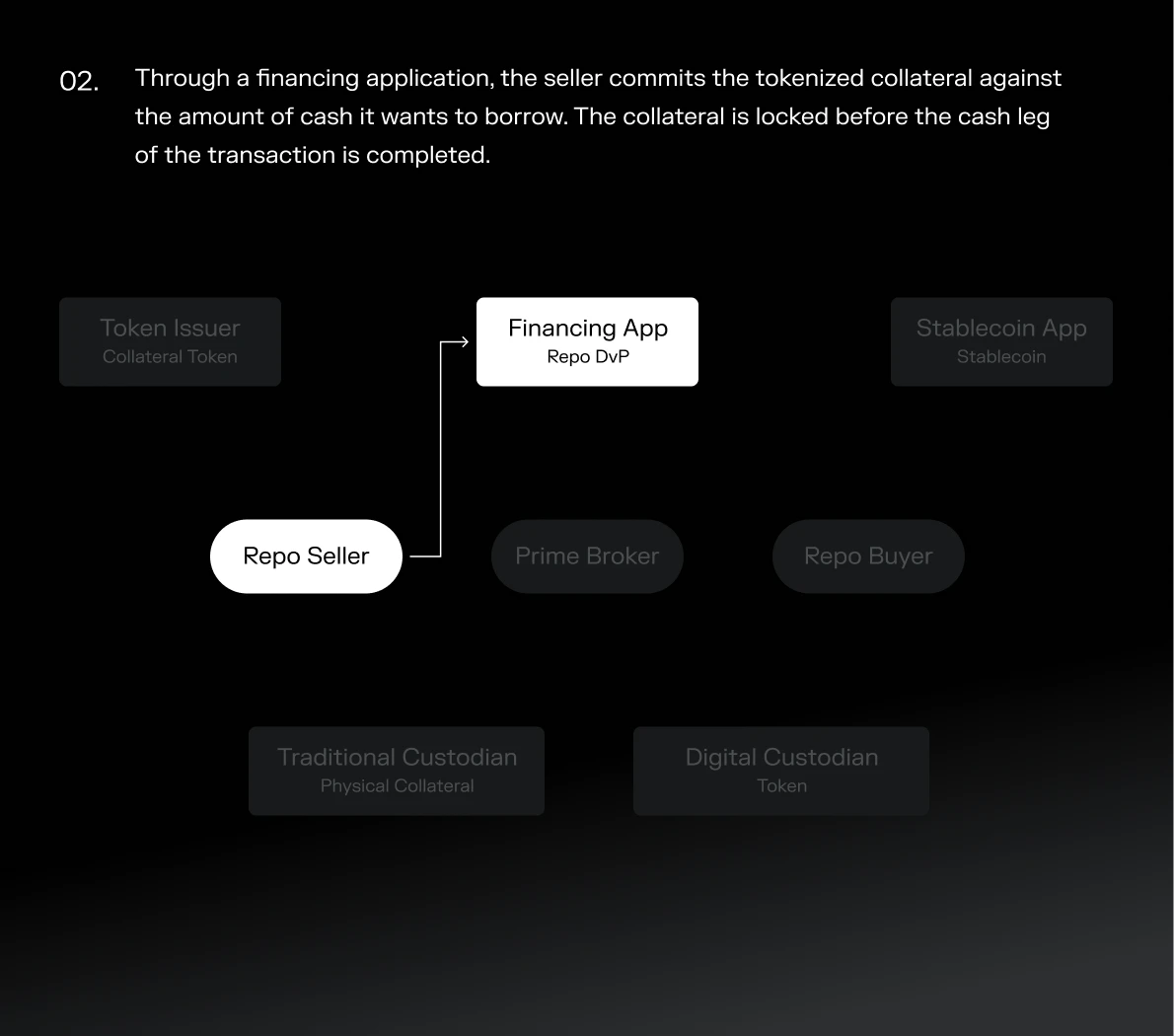
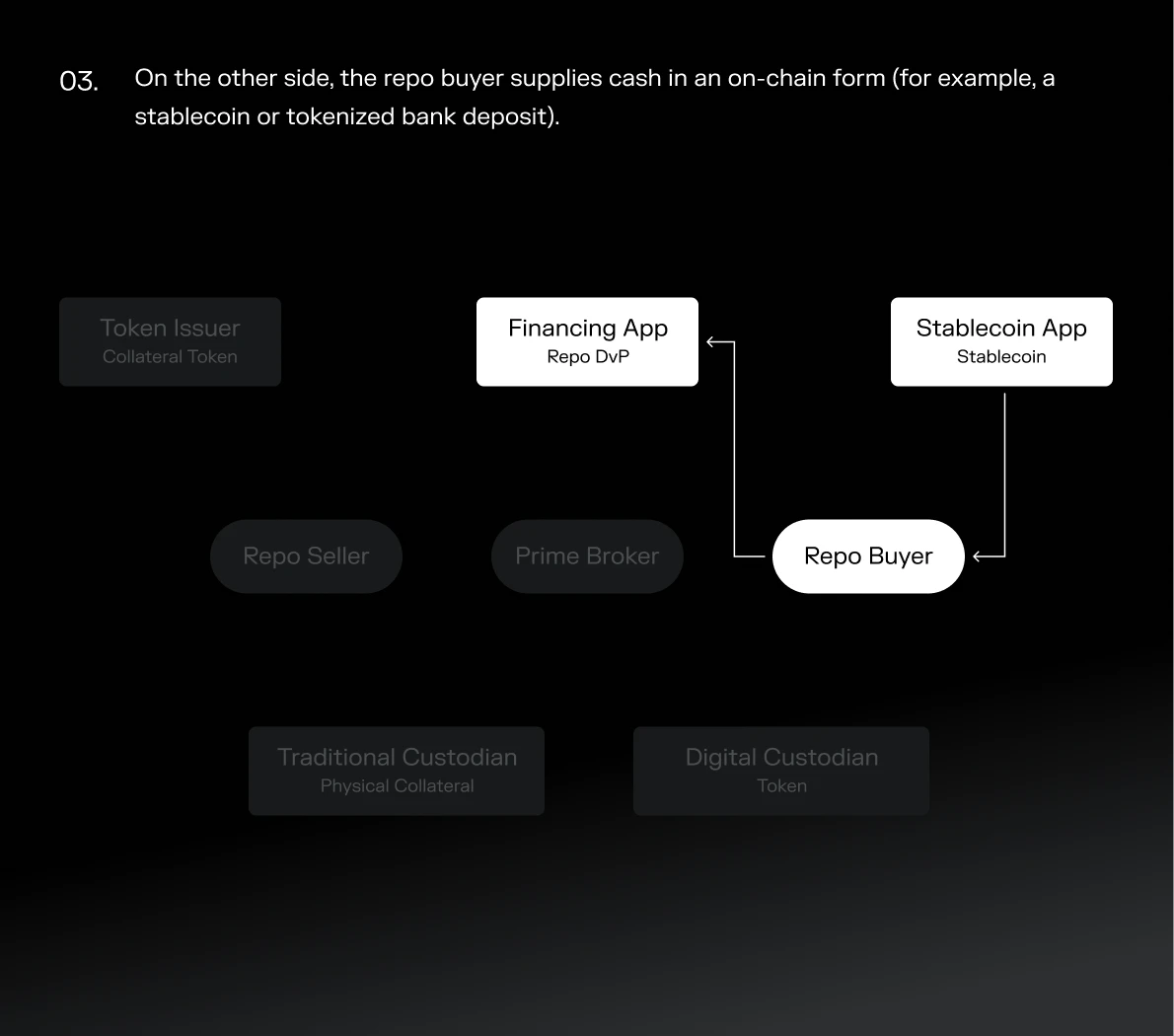
Follow the flow of collateral and cash through each stage of a tokenized repo trade.

Market Participants

Who Makes It Happen?

What can appear to be a straightforward exchange of collateral for cash is supported by a much broader institutional ecosystem.

Repo Seller

The participant seeking financing. The seller contributes Treasury collateral to the transaction and receives cash in return.

Repo Buyer

The provider of cash. The buyer delivers liquidity against the seller’s collateral and receives that collateral as part of the repo transaction.

Financing Application

The marketplace where the transaction comes together. The financing application connects buyer and seller and orchestrates the workflow between the different parties and assets involved.

Collateral Token Issuer

Creates and maintains the tokenized collateral used in the transaction and the infrastructure connecting the on-chain asset to its underlying collateral.

Tokenized Cash Provider

The issuer of the asset used on the cash side of the transaction. That could be a stablecoin such as USDC or a tokenized bank deposit.

Prime Broker

The prime broker can facilitate the accounts and infrastructure through which buyer and seller exchange collateral and cash. Early implementations can be easier when both counterparties operate through the same prime broker.

Custodians

The tokens move on-chain, but the underlying assets still need to be held securely. Traditional custodians can safeguard the underlying securities or cash supporting tokenized assets, while digital custodians and wallet providers can support custody of the corresponding on-chain tokens.

Expanding Utility

The Network Effect
 of Shared Collateral

A single tokenized repo transaction can deliver meaningful benefits. But the larger opportunity emerges when more participants can use the same collateral asset across transactions, counterparties and applications.

More
Potential Activity

A shared collateral asset can expand the pool of counterparties and transactions as more sellers, venues and cash providers support it.

More
Repeatable Financing

Pairing the same collateral with stablecoins and tokenized deposits creates a more consistent, scalable transaction model.

More
Collateral Mobility

Collateral received in one transaction can be redeployed into the next, moving across participants, applications and use cases.

USIG is built for exactly this kind of role

A single token representing Treasury collateral that can be held, pledged and exchanged against tokenized cash, then redeployed across additional on-chain workflows.